Wütende
Designer!
Jan-Erik Baars
Prof. Hochschule Luzern, Schweiz
Associate Partner, VanBerlo
Inhaber designfokus
Meta Change!


© iStockphoto
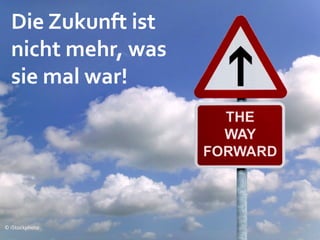
Die Zukunft ist
  nicht mehr, was
  sie mal war!


© iStockphoto
© iStockphoto
© iStockphoto
© iStockphoto
© iStockphoto
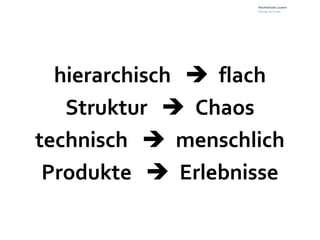
hierarchisch flach
   Struktur Chaos
technisch menschlich
 Produkte Erlebnisse
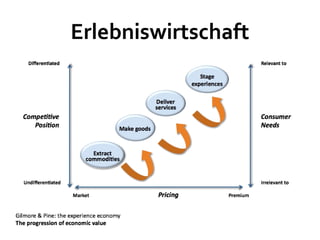
Erlebniswirtschaft
Innovation heute


© iStockphoto
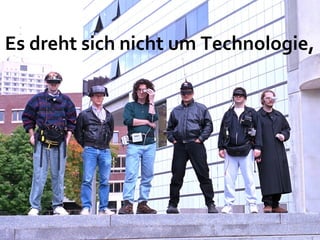
Es dreht sich nicht um Technologie,
es dreht sich um Menschen...
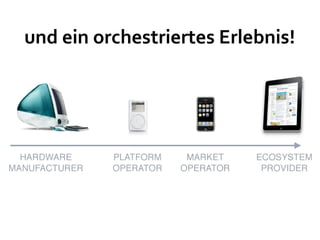
und ein orchestriertes Erlebnis!
Erlebnis:
(wie funktioniert das?)
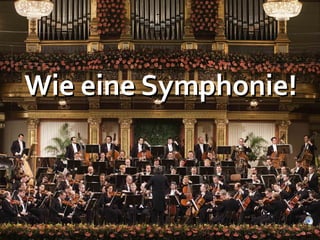
Wie eine Symphonie!
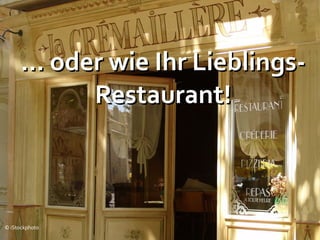
... oder wie Ihr Lieblings-
             Restaurant!


© iStockphoto
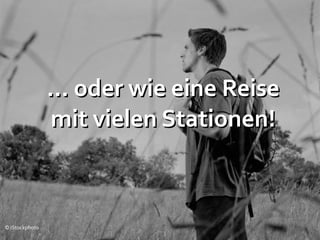
... oder wie eine Reise
                 mit vielen Stationen!


© iStockphoto
Was bedeutet das für´s Design?
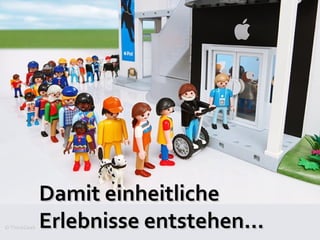
Damit einheitliche
© ThinkGeek   Erlebnisse entstehen...
experience
                   müssen sie
                   orchestriert
© iStockphoto
                   werden!
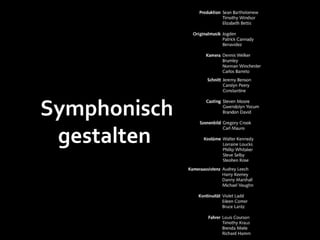
Symphonisch
 gestalten
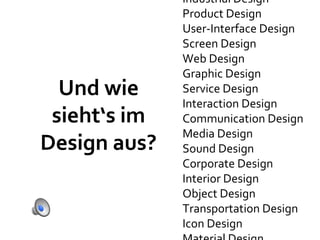
Industrial Design
              Product Design
              User-Interface Design
              Screen Design
              Web Design
              Graphic Design
  Und wie     Service Design
              Interaction Design
 sieht‘s im   Communication Design
              Media Design
Design aus?   Sound Design
              Corporate Design
              Interior Design
              Object Design
              Transportation Design
              Icon Design
Wir wüten
     herum!


© iStockphoto
Zum Beispiel:
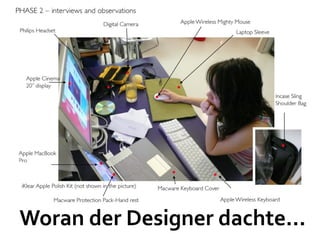
Woran der Designer dachte...
Das Konzept
des Designers...
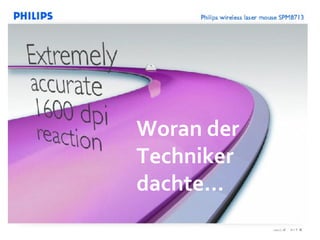
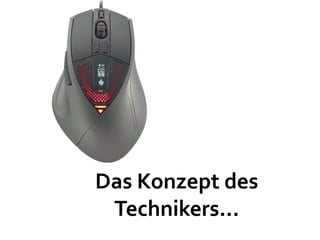
Woran der
Techniker
dachte...
Das Konzept des
 Technikers...
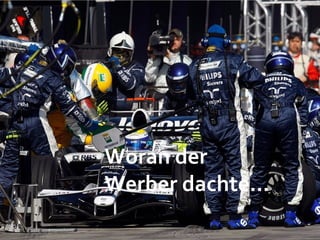
Woran der
Werber dachte...
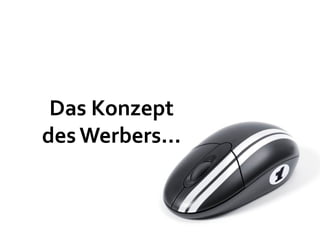
Das Konzept
des Werbers...
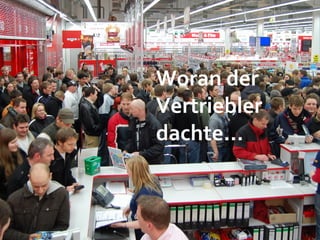
Woran der
Vertriebler
dachte...
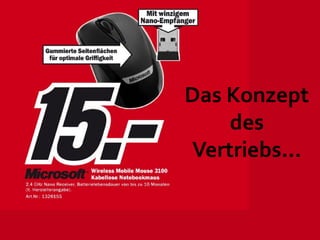
Das Konzept
    des
Vertriebs...
Warum?
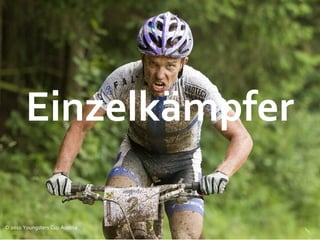
Einzelkämpfer

© 2010 Youngsters Cup Austria
Leidenschaft?
Wut?
Macht?
Isolation?
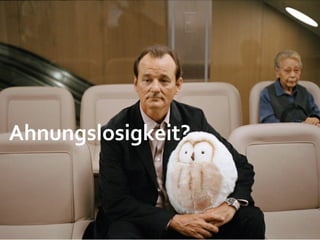
Ahnungslosigkeit?
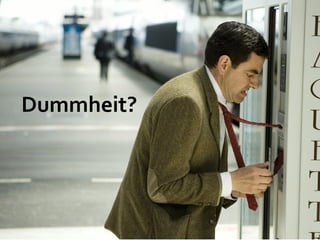
Dummheit?
Das geht
besser!!
 (H. Simon)
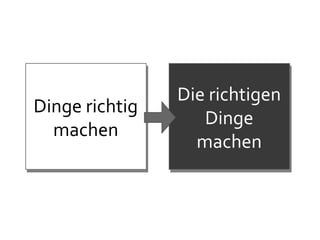
Designsymphonie!
Die richtigen
Dinge richtig
                   Dinge
  machen
                  machen
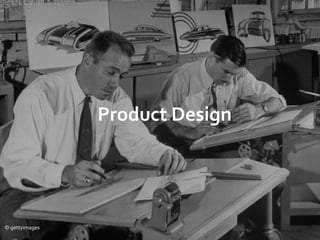
Product Design


© gettyimages
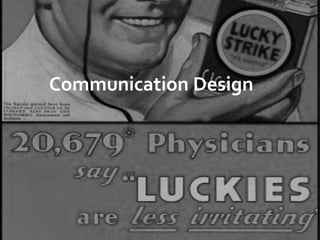
Communication Design
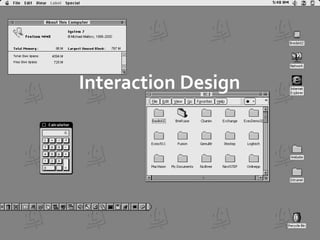
Interaction Design
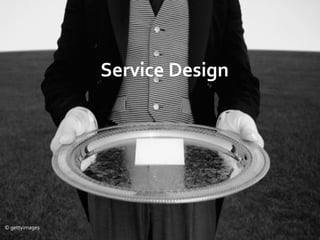
Service Design


© gettyimages
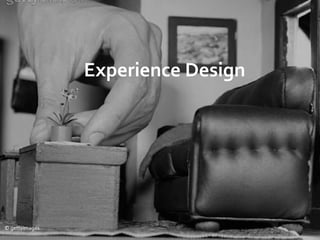
Experience Design


© gettyimages
© wikipedia
© wikipedia
Beginn
mit dem
Ende...
Beginn
 mit
Design!
Alte Logik:

‘Dienstleistungen sind das,
was übrig bleibt, wenn man
das Produkt entfernt.’
Neue Logik:

‘Erlebnisse sind holistische
Dienstleistungen, die
ermöglichen, dass Mehrwert
entsteht – bei allen Beteiligten.’
Und wo ist
   der Gewinn?


© iStockphoto
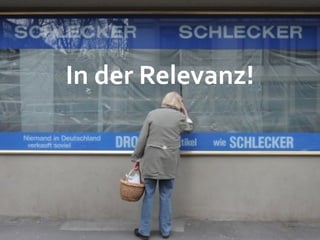
In der Relevanz!
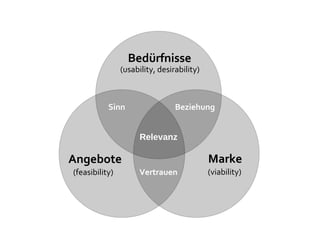
Bedürfnisse
                (usability, desirability)


           Sinn                  Beziehung


                      Relevanz

Angebote                                    Marke
(feasibility)         Vertrauen             (viability)
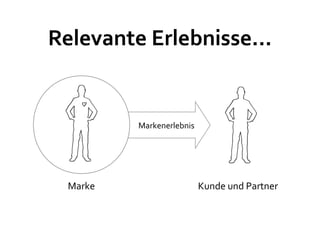
Relevante Erlebnisse...


          Markenerlebnis


  Marke                    Kunde und Partner
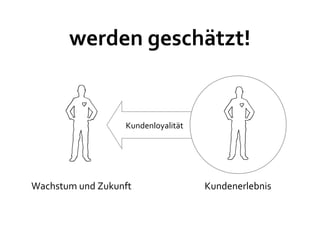
werden geschätzt!

                  Kundenloyalität


Wachstum und Zukunft                Kundenerlebnis
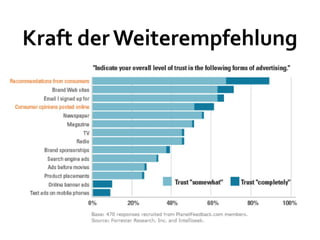
Kraft der Weiterempfehlung
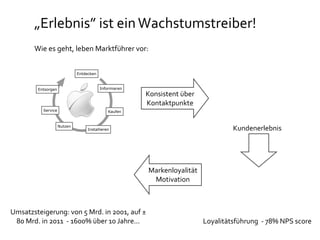
„Erlebnis” ist ein Wachstumstreiber!
       Wie es geht, leben Marktführer vor:

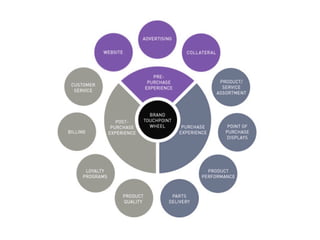
                             Entdecken


        Entsorgen                        Informieren
                                                       Konsistent über
                                                       Kontaktpunkte
          Service                            Kaufen


                    Nutzen
                                  Installieren                                    Kundenerlebnis


                                                       Markenloyalität
                                                        Motivation


Umsatzsteigerung: von 5 Mrd. in 2001, auf ±
 80 Mrd. in 2011 - 1600% über 10 Jahre...                                Loyalitätsführung - 78% NPS score
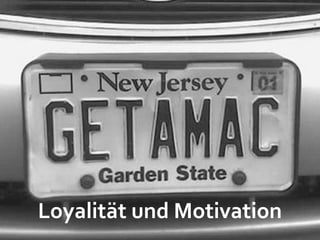
Loyalität und Motivation
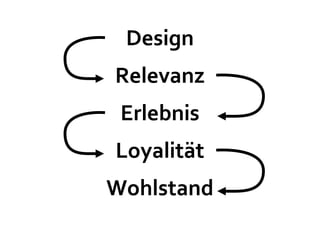
Design
Relevanz
 Erlebnis
Loyalität
Wohlstand
Was sollte
 Designer
antreiben?
Wut?
© CHIP Fotowelt
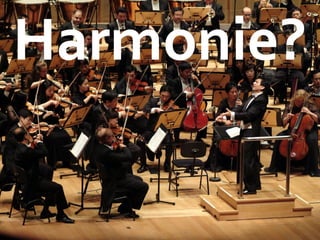
Harmonie?
Vielen Dank!
© iStockphoto

cch12 - Wütende Designer

Hinweis der Redaktion

  • #6 From the agricultural age, and thereafter the industrial age, we have come a long way and now are moving into the knowledge age. And with this shift, our society has become flatter and flatter, we are now living in a pancake world.The hierarchical systems as we knew them from the old ages are falling apart and are rapidly taken over by flatter systems, with different kind of boundaries between social and economical systems.
  • #9 Where yesterdays innovation was about technology, about products, about management and risk management, it was mainly part of R&D and it was therefore closed.
  • #10 Also they become more radical in their meaning: some solutions designate new meaning to existing combinations and therefore create innovative propositions.
  • #11 This ,meaning ‘ is fully addressed, if people needs are met through a function that comes with a particular brand or language. Here design is not an actions to shape an identity, no, it ‘s a process to create a relevant experience across all touch points a brand provides! Design is the process to connect the technological side of innovation (inventions) and the brand side (branding) to create meaning for people.
  • #12 This phenomena is reflected in the development of economic progression in our society: Gilmore and Pine have stated, that economic progress will be mainly achieved by staging of experiences. Creating barriers to competition will be only possible, by providing differentiating and highly relevant propositions to consumers. The fact that 80% of our GDP is in services shows that we are more and more entering into an immaterial world. All this has a strong impact on innovation, as we know it.
  • #13 So innovation today is about all that carries value: it is about creativity, entrepreneurship and vision, it is part of culture and it is open.
  • #14 In this sense, innovation today is truly becoming open: creating relevant and differentiating experiences for and with consumers is now defining success - slowly but surely, humans are moving centre stage.
  • #17 This ,meaning ‘ is fully addressed, if people needs are met through a function that comes with a particular brand or language. Here design is not an actions to shape an identity, no, it ‘s a process to create a relevant experience across all touch points a brand provides! Design is the process to connect the technological side of innovation (inventions) and the brand side (branding) to create meaning for people.
  • #19 Therefore this way of innovation very much depends on the brand, the personality behind the proposition: the brand or the personality conceiving the proposition.Brands are like personalities and can embody a companies effort to become meaningful for consumers. This is something we are accustomed by for ages, e.g. in the service industry... Just ask yourself: What makes your favorite restaurant your favorite, and why do you recommend it to your best friends?
  • #29 This ,meaning ‘ is fully addressed, if people needs are met through a function that comes with a particular brand or language. Here design is not an actions to shape an identity, no, it ‘s a process to create a relevant experience across all touch points a brand provides! Design is the process to connect the technological side of innovation (inventions) and the brand side (branding) to create meaning for people.
  • #38 This ,meaning ‘ is fully addressed, if people needs are met through a function that comes with a particular brand or language. Here design is not an actions to shape an identity, no, it ‘s a process to create a relevant experience across all touch points a brand provides! Design is the process to connect the technological side of innovation (inventions) and the brand side (branding) to create meaning for people.
  • #41 In this lies the true challenge - filtering out the relevant ideas... and having the right vision on how to execute the ideas.The challenge lies in assessing the relevance of the idea for the targeted user, and to determine whether the company or brand can provide relevance to this user. Some companies are getting lost in translating ideas into relevance - relevance for themselves and for their customers...A way out is the third way to put humans centre stage:
  • #44 In this lies the true challenge - filtering out the relevant ideas... and having the right vision on how to execute the ideas.The challenge lies in assessing the relevance of the idea for the targeted user, and to determine whether the company or brand can provide relevance to this user. Some companies are getting lost in translating ideas into relevance - relevance for themselves and for their customers...A way out is the third way to put humans centre stage:
  • #45 In this lies the true challenge - filtering out the relevant ideas... and having the right vision on how to execute the ideas.The challenge lies in assessing the relevance of the idea for the targeted user, and to determine whether the company or brand can provide relevance to this user. Some companies are getting lost in translating ideas into relevance - relevance for themselves and for their customers...A way out is the third way to put humans centre stage:
  • #46 This ,meaning ‘ is fully addressed, if people needs are met through a function that comes with a particular brand or language. Here design is not an actions to shape an identity, no, it ‘s a process to create a relevant experience across all touch points a brand provides! Design is the process to connect the technological side of innovation (inventions) and the brand side (branding) to create meaning for people.
  • #48 Here the approach is to get under the skin of the consumer, and to focus on making the right thing, and not only on making things right. Insightful development works as a filter to skim through the vast amount of ideas: it helps to find out which idea fits best to the company or brand conceiving it, and to the person using it.
  • #56 This ,meaning ‘ is fully addressed, if people needs are met through a function that comes with a particular brand or language. Here design is not an actions to shape an identity, no, it ‘ s a process to create a relevant experience across all touch points a brand provides! Design is the process to connect the technological side of innovation (inventions) and the brand side (branding) to create meaning for people.
  • #57 This ,meaning ‘ is fully addressed, if people needs are met through a function that comes with a particular brand or language. Here design is not an actions to shape an identity, no, it ‘ s a process to create a relevant experience across all touch points a brand provides! Design is the process to connect the technological side of innovation (inventions) and the brand side (branding) to create meaning for people.
  • #60 This ,meaning ‘ is fully addressed, if people needs are met through a function that comes with a particular brand or language. Here design is not an actions to shape an identity, no, it ‘ s a process to create a relevant experience across all touch points a brand provides! Design is the process to connect the technological side of innovation (inventions) and the brand side (branding) to create meaning for people.
  • #61 This ,meaning ‘ is fully addressed, if people needs are met through a function that comes with a particular brand or language. Here design is not an actions to shape an identity, no, it ‘ s a process to create a relevant experience across all touch points a brand provides! Design is the process to connect the technological side of innovation (inventions) and the brand side (branding) to create meaning for people.
  • #62 This ,meaning ‘ is fully addressed, if people needs are met through a function that comes with a particular brand or language. Here design is not an actions to shape an identity, no, it ‘ s a process to create a relevant experience across all touch points a brand provides! Design is the process to connect the technological side of innovation (inventions) and the brand side (branding) to create meaning for people.
  • #63 The basis for building a mutual relationship with consumers and users starts with being human oneself, assuming a personal standpoint. It is an inside-out approach, of having a clear standpoint towards issues and propositions, as the basis for conceiving and proposing new meaningful innovations. In the end it ‘ s about meeting own needs with the user ‘ s needs, in order to create a mutual relationship based on trust.
  • #64 Innovation is truly successful in economic terms, when a rewarding relationship between brand and user occurs - in the end it needs to trigger economic transactions. The economic reward is most fulfilling if the meaningful relationship, resulting from the provided experiences, leads to deep and engaged user loyalty and motivation.
  • #65 As such recommendation has become the strongest growth engine in the networked society and moves centre stage in corporate strategies. Meaningful innovations can drive user loyalty and trust to an higher level, and unleash the power of ,word of mouth ‘ - it can ignite strong advocacy for the brand and thus fuel the growth of the company.
  • #67 Strong brand advocacy is on of the most differentiating elements in competition. Because today, consumers define the barriers to competition!
  • #68 If you start with design to drive your innovation activities and use design driven processes to create meaning for the brand ‘ s proposals, the resulting loyalty of customers will fuel long term profits. In making sure that meaningful innovation can lead to brand promotion, the resulting customer experience and loyalty will fuel growth of the involved companies. In the end, innovation is about the application of combinations that make a difference: combining the strength of your brand, what ever it is, with the strength of your customers loyalty, new market wining innovation can happen. By putting people centre stage in the innovation process and by having a designful approach to create meaning to them , market leadership can be reached and kept!
  • #70 Today the boundaries are less between classes, more and more between opinions. This also influences the behavior of the consumer: Recommendation between peers takes over from a managed top-down distribution of opinion by the few... and at the same time brands increasingly provide meaning to people, substituting for lack of social structures.
  • #71 This ,meaning ‘ is fully addressed, if people needs are met through a function that comes with a particular brand or language. Here design is not an actions to shape an identity, no, it ‘ s a process to create a relevant experience across all touch points a brand provides! Design is the process to connect the technological side of innovation (inventions) and the brand side (branding) to create meaning for people.
  • #72 Thank you for your attention!