EPortfolios  in der Bildung Erfahrungen aus dem EU Projekt MOSEP ein Schritt zur Eigenverantwortlichkeit der Lernenden Umsetzung in der schulischen Praxis
Inhalte MOSEP Projekt  MOSEP FOBI Pilotprojekt Esslingen 21st  Century   Learning Pilotprojekt  Schule Umsetzung  Lehrerfortbildung Konsequenzen für die  Lehrerausbildung? Konsequenzen für den  Unterricht?
M o re  s elf- e steem  with my e- P ortfolio
e-Portfolios for  starters
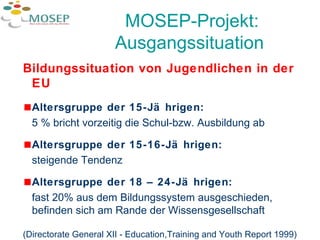
MOSEP-Projekt: Ausgangssituation   Bildungssituation von Jugendlichen in der EU Altersgruppe der 15-Jährigen:   5 % bricht vorzeitig die Schul-bzw. Ausbildung ab Altersgruppe der 15-16-Jährigen:  steigende Tendenz Altersgruppe der 18 – 24-Jährigen:   fast 20% aus dem Bildungssystem ausgeschieden, befinden sich am Rande der Wissensgesellschaft (Directorate General XII - Education,Training and Youth Report 1999)
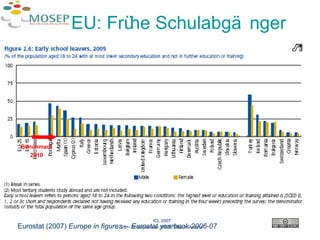
EU: Frühe Schulabgänger   Eurostat (2007)  Europe in figures – Eurostat yearbook 2006-07 ICL 2007 26 – 28 September, 2007, Villach, Austria Benchmark 2010
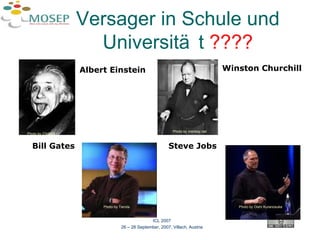
Versager in Schule und Universität  ???? Albert Einstein Winston Churchill Bill Gates Steve Jobs ICL 2007 26 – 28 September, 2007, Villach, Austria Photo by C!b0rg5 Photo by Tienda Photo by Oishi Kuranosuke Photo by monkey.net
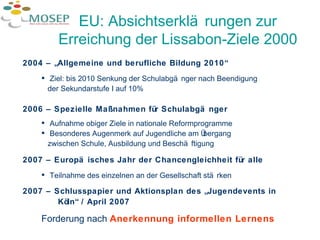
EU: Absichtserklärungen zur Erreichung der Lissabon-Ziele 2000 2004 – „Allgemeine und berufliche Bildung 2010“ Ziel: bis 2010 Senkung der Schulabgänger nach Beendigung der Sekundarstufe I auf 10% 2006 – Spezielle Maßnahmen für Schulabgänger Aufnahme obiger Ziele in nationale Reformprogramme Besonderes Augenmerk auf Jugendliche am Übergang  zwischen Schule, Ausbildung und Beschäftigung  2007 – Europäisches Jahr der Chancengleichheit für alle Teilnahme des einzelnen an der Gesellschaft stärken  2007 – Schlusspapier und Aktionsplan des „Jugendevents in  Köln“ / April 2007 Forderung nach  Anerkennung informellen Lernens
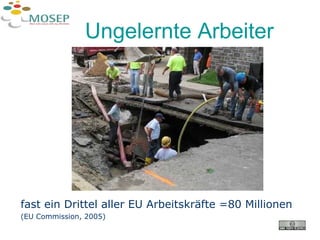
Ungelernte Arbeiter fast ein Drittel aller EU Arbeitskräfte =80 Millionen   (EU Commission, 2005)
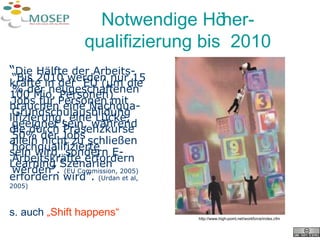
Notwendige Höher- qualifizierung bis  2010 “ Bis 2010 werden nur 15 % der neugeschaffenen Jobs für Personen mit Grundschulausbildung geeignet sein, während 50% der Jobs hochqualifizierte  Arbeitskräfte erfordern werden”.  (EU Commission, 2005) “ Die Hälfte der Arbeits-kräfte in der  EU (um die 100 Mio. Personen) brauchen eine Nachqua-lifizierung, eine Lücke, die durch Präsenzkurse allein nicht zu schließen sein wird, sondern E-Learning Szenarien erfordern wird”.   (Urdan et al, 2005) s. auch  „ Shift   happens “ http://www.high-point.net/workforce/index.cfm
Shift happens
Shift happens… Slideshare  Version PowerPoint  Download Version - verlinkt
Change   We Need Schüler Lehramtsstudenten Lehrer Kultusverwaltung
 
If  we  don‘t grab the future… the future  will grab us….
 
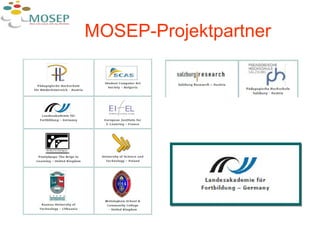
MOSEP- Projektpartner Salzburg Research Forschungsgesellschaft – AT Pädagogische Hochschule Niederösterreich – AT Pädagogische Hochschule Salzburg – AT SCAS -Student Computer Art Society – BG Landesakademie für Fortbildung Esslingen – D EifEL – European Institute for E-Learning – FR Kaunas University of Technology – LT University of Science & Technology – PL Pontydysgu – Bridge to Learning – UK Wolsingham   School & Community College - UK
MOSEP- Projektpartner
MOSEP - Ziele  Selbstgesteuertes + lebenslanges Lernen mit ePortfolio für 14-16 Jährige Unterstützung der Jugendlichen: Stärken  und Entwicklungsmöglichkeiten erkennen und reflektieren. Fertigkeiten  und  Kompetenzen  entwickeln Fertigkeiten zur  Selbstdarstellung  verbessern Potentiale  erkennen und dadurch mehr  Selbst-bewusstsein  entwickeln schulische  Laufbahn  oder  Berufsausbildung  fortsetzen
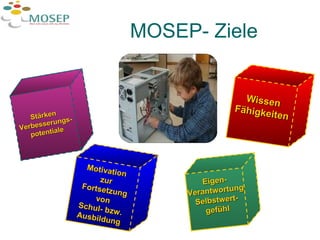
MOSEP- Ziele  Stärken  Verbesserungs- potentiale Wissen Fähigkeiten Eigen- Verantwortung Selbstwert- gefühl Motivation zur Fortsetzung von Schul- bzw. Ausbildung
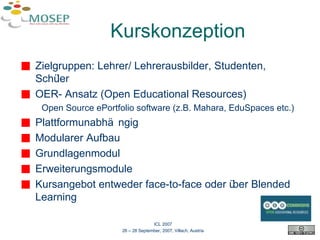
Kurskonzeption Zielgruppen: Lehrer/ Lehrerausbilder, Studenten, Schüler OER- Ansatz (Open Educational Resources) Open Source ePortfolio software (z.B. Mahara, EduSpaces etc.) Plattformunabhängig Modularer Aufbau Grundlagenmodul Erweiterungsmodule Kursangebot entweder face-to-face oder über Blended Learning ICL 2007 26 – 28 September, 2007, Villach, Austria
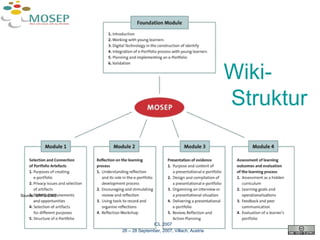
Wiki-Struktur Source: SRFG 2007 ICL 2007 26 – 28 September, 2007, Villach, Austria
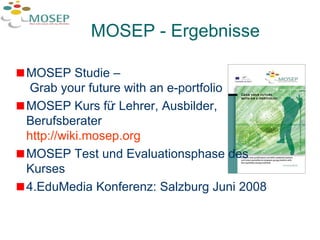
MOSEP - Ergebnisse  MOSEP Studie –  Grab your future with an e-portfolio MOSEP Kurs für Lehrer, Ausbilder, Berufsberater  http:// wiki.mosep.org MOSEP Test und Evaluationsphase des Kurses 4.EduMedia Konferenz: Salzburg Juni 2008
MOSEP - Lösungen Bewusstsein für SOL mit e-Portfolios wecken Materialien und Ressourcen als flexibles Auswahl-Menu (wiki) Software- und plattformunabhängige Materialien mit Fokus auf didaktische Methoden und Beratungsprozess Selbsterklärende Materialien für unterschiedliche Zielgruppen und Bereiche Materialien Online und als DVD
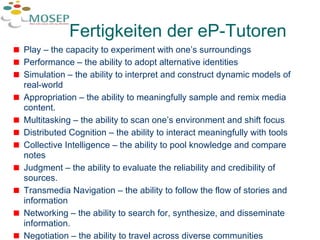
Fertigkeiten der eP-Tutoren Play – the capacity to experiment with one’s surroundings Performance – the ability to adopt alternative identities Simulation – the ability to interpret and construct dynamic models of real-world Appropriation – the ability to meaningfully sample and remix media content. Multitasking – the ability to scan one’s environment and shift focus  Distributed Cognition – the ability to interact meaningfully with tools  Collective Intelligence – the ability to pool knowledge and compare notes  Judgment – the ability to evaluate the reliability and credibility of sources. Transmedia Navigation – the ability to follow the flow of stories and information Networking – the ability to search for, synthesize, and disseminate information. Negotiation – the ability to travel across diverse communities
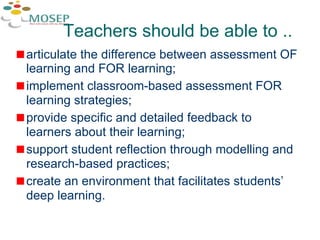
Teachers should be able to .. articulate the difference between assessment OF learning and FOR learning; implement classroom-based assessment FOR learning strategies; provide specific and detailed feedback to learners about their learning; support student reflection through modelling and research-based practices; create an environment that facilitates students’ deep learning.
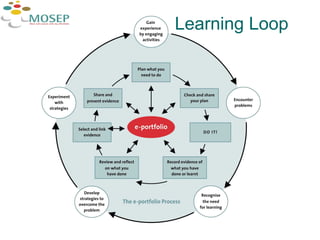
Learning Loop
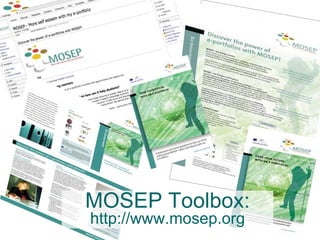
MOSEP Toolbox: http://www.mosep.org
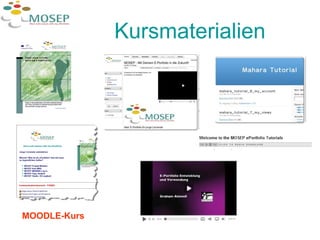
Kursmaterialien  MOODLE-Kurs
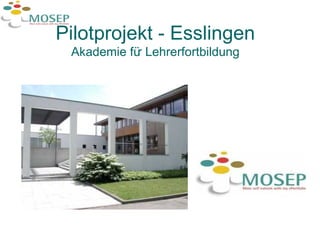
Pilotprojekt - Esslingen Akademie für Lehrerfortbildung
Mark Twain „ Menschen mit einer  neuen Idee  gelten solange als  Spinner , bis die Idee sich durchgesetzt hat.“
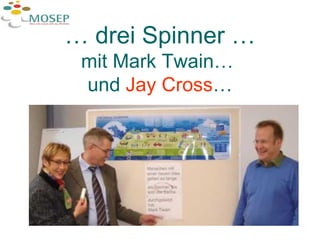
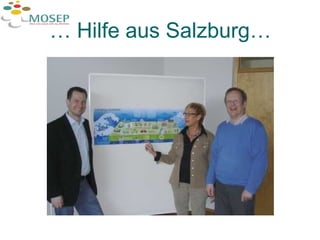
…  drei Spinner … mit Mark Twain…  und  Jay Cross …
…  Hilfe aus Salzburg…
Moodle Kursraum für alle TN Kommunikationsforen Begleitung während der Testphase Ständige Verfügbarkeit der Kursleiter Zusatzmaterialien und Links Aufgabenstellungen zum Bearbeiten …  vor dem Test…
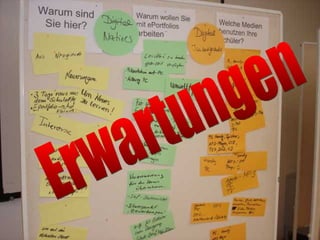
Erwartungen
… im Test… Unsicherheit in der Mediennutzung   Sehr heterogene Gruppe  Erwartungshaltung: einfache Anleitung aber : Materialfülle und Theorie   Zielvorstellung:  sofortige Anwendbarkeit Frustration : Probleme mit Software  
…  nach dem Test … Trotz erster Ergebnisse nur zögerliche oder keine Weiterarbeit  Aber auch: Sofortige Projekte zur Umsetzung  Probleme mit Administration und Unterstützung der Projekte
21st Century learning Eine Vision unserer Schüler
 
21st century learning formal learning ? non-formal learning ? informal learning ? face-to-face learning ? distance learning ? blended learning ?
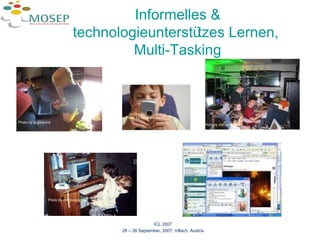
Informelles & technologieunterstützes Lernen,  Multi-Tasking ICL 2007 26 – 28 September, 2007, Villach, Austria Photo by sugarpond Photo by sugarpond Photo by computeramey Photo by computeramey Photo by sugarpond
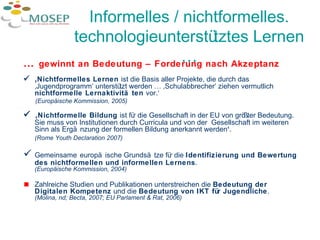
Informelles / nichtformelles. technologieunterstütztes Lernen … …  gewinnt an Bedeutung – Forderung nach Akzeptanz   ‚ Nichtformelles Lernen  ist die Basis aller Projekte, die durch das ‚Jugendprogramm‘ unterstützt werden … ‚Schulabbrecher‘ ziehen vermutlich  nichtformelle Lernaktivitäten  vor.‘ ( Europäische Kommission, 2005)  ‚ Nichtformelle Bildung  ist für die Gesellschaft in der EU von größter Bedeutung. Sie muss von Institutionen durch Curricula und von der  Gesellschaft im weiteren Sinn als Ergänzung der formellen Bildung anerkannt werden ‘ .  (Rome Youth Declaration 2007)  Gemeinsame   europäische Grundsätze für die  Identifizierung und Bewertung des nichtformellen und informellen Lernens .  (Europäische Kommission, 2004)  Zahlreiche Studien und Publikationen unterstreichen die  Bedeutung der  Digitalen Kompetenz  und die  Bedeutung von IKT für Jugendliche .  (Molina, nd; Becta, 2007; EU Parlament & Rat, 2006)
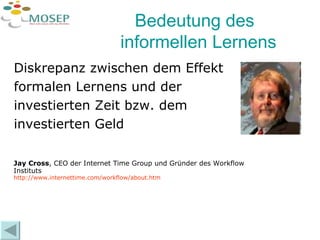
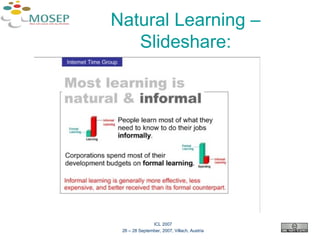
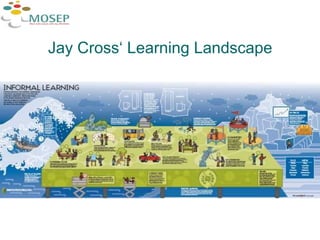
Bedeutung des informellen Lernens Jay Cross , CEO der Internet Time Group und Gründer des Workflow Instituts http://www.internettime.com/workflow/about.htm Diskrepanz zwischen dem Effekt  formalen Lernens und der  investierten Zeit bzw. dem  investierten Geld
Natural Learning – Slideshare: ICL 2007 26 – 28 September, 2007, Villach, Austria
Jay Cross‘ Learning Landscape
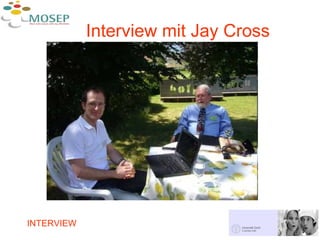
Interview mit Jay Cross INTERVIEW
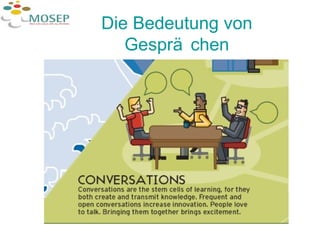
Die Bedeutung von Gesprächen
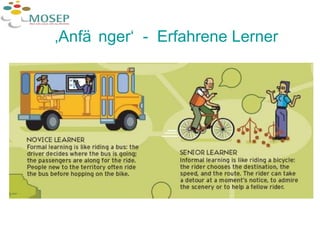
‚ Anfänger‘  -  Erfahrene Lerner
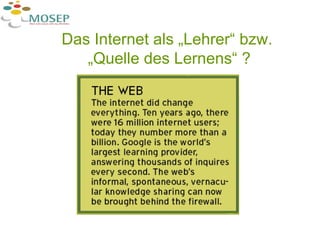
Das Internet als „Lehrer“ bzw.  „Quelle des Lernens“ ?
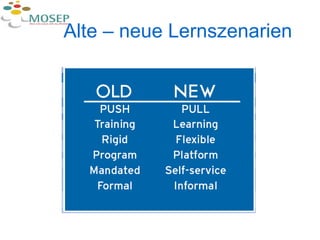
Alte – neue Lernszenarien
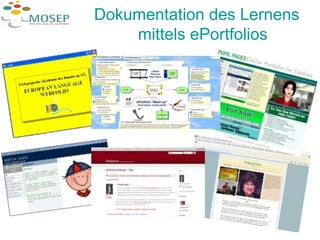
Dokumentation des Lernens  mittels ePortfolios
…  ein steiniger Weg…


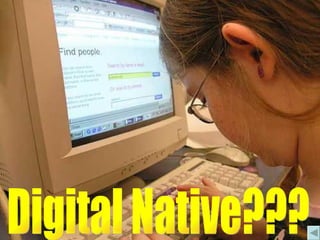
Digital Native???
der größte Stein… ?
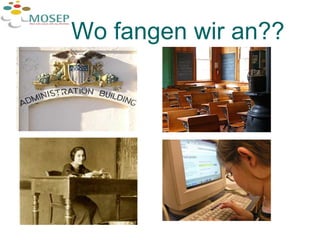
Wo fangen wir an??
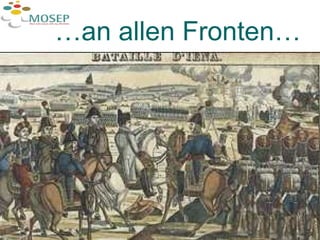
… an allen Fronten…
Lineares Lernen
Lehrer-ausbildung
Dienst-strukturen
Ausstattung
SOL Selbstorganisiertes Lernen
Informelles Lernen
?
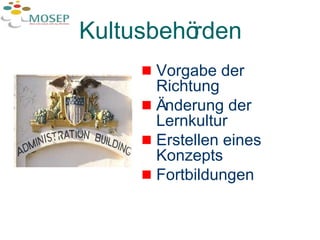
Kultusbehörden Vorgabe der Richtung Änderung der Lernkultur Erstellen eines Konzepts Fortbildungen
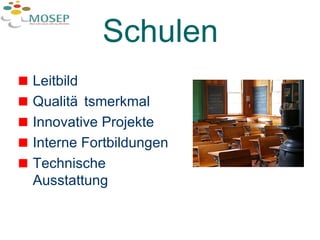
Schulen Leitbild Qualitätsmerkmal Innovative Projekte Interne Fortbildungen Technische Ausstattung
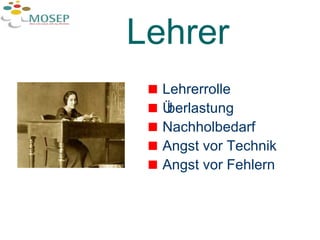
Lehrer Lehrerrolle Überlastung  Nachholbedarf Angst vor Technik Angst vor Fehlern
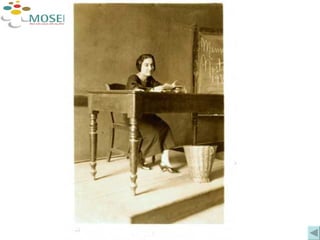
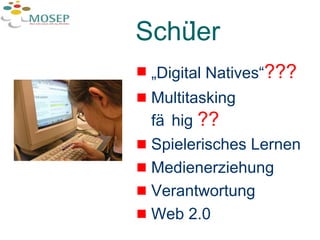
Schüler „ Digital Natives“ ??? Multitasking fähig  ?? Spielerisches Lernen Medienerziehung Verantwortung Web 2.0
Software Einwandfreie Funktionalität Einfache Bedienung Modularer Aufbau Support und Wartung
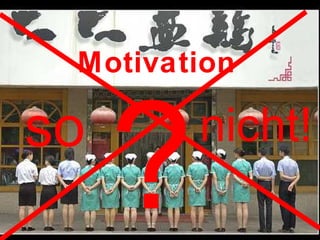
Motivation   ? so nicht!
Was ist zu tun? Referendare im Seminar ausbilden Pilotprojekte unterstützen Freiräume zum Ausprobieren schaffen Einsatz von IT im Unterricht fördern Engagierte Lehrerteams fördern Einbinden von Eltern, Betrieben Begleitung durch FOBIs auf Abruf anbieten
EPortfolio in der Lehrerausbildung Anwendung durch  Tutoren Einbinden ins  Curriculum Bestandteil des Studiums Kultivieren von  Feedback Keine Technikseminare! Didaktische Szenarien
Studenten Digital  natives ?  Digital  immigrants ? Digital  ignorants ?
Why I became a  teacher …
Cristina Costa on new learning … I also come across loads of teachers complaining about work overload, tiredness of a system that doesn't really comply with  practice: too much testing, a too extensive curriculum, etc ,  it's true. But how come some still find time and energy to learn about the 'this new stuff' - to adequate their practice to the so called 21st century classroom, and others don't, if everyone is so busy? ..
Are these teachers special? Maybe they are. They are the ones who care about their job, their students, their school - who have pride in what they do and want to keep doing it well.  Many of the others arent really in this profession for passion, vocation or conviction. It's just one more job! Being an educator these days doesn't give you that much of a status and the way I see it there are only two kinds of people get into it: those who really have their hearts into learning/teching, and those who didn't know what else to do with themselves (and those come in huge numbers!!). Cristina Costa on new learning
I think there is a culture to change here - and it will take time.  Another thing I think vital is  initial teacher training  - we need to add this philosophy to teacher training - and not just as one more course students have to take to finish their degree in teaching a subject, but  as something it's embedded all the way through in their degrees  - we shape attitude and let people form their own ideas better by leading the way - and  if future teachers learn this way - they will be more compelled to teach this way.  Cristina Costa on new learning
Good and bad teaching is not associated with the use of technology or the lack of it - it has to do with how much the individual is willing to put  into it.  Cristina Costa on new learning
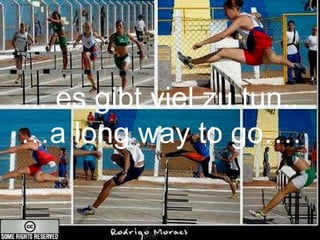
... es gibt viel zu tun.. …a long way to go….
Quellenangaben Becta  (2007)  Impact Study of  e-portfolios  on  learning . Council  of  the  European Union (2004)  Draft Conclusions of the Council and of the representatives of the Governments of the Member States meeting within the Council on Common European Principles for the identification and validation of non-formal and informal learning.   Brussels: The General Secretariat of the Council. European Parliament (2006) Recommendation of the European Parliament and of the Council of 18 December 2006 on key competences for lifelong learning .   In:  Official Journal of the European Union , L394/10. Eurostat  (2007)  Europe in figures –  Eurostat  yearbook 2006-07.  Luxembourg:Office for Official Publications of the European Communities. EUYouthMagazine  (2001)  In their own words European Commission (2005)  Including all with the ‘Youth Programme’.  Brussels:  Directorate General for Education and Culture (DG EAC) Jeunesse Forum (2007)  Rome   Youth  Declaration-25 März 2007 Molina ( nd )  Is ICT-based Innovation in Educational Systems Truly Important ?  Overview of Key Develpments,  Trends and Policies Shaping Education in the 21st Century. Edinburgh: University of Edinburgh. ICL 2007 26 – 28 September, 2007, Villach, Austria
DANKE! An Gerlinde Buchberger, die mir ihre Präsentation zur Verfügung gestellt hat, um einzelne Folien zu übernehmen!
Quellen Wikipedia Bildmaterial  flickr
Autorin Sigi Jakob-Kühn, OStR‘in Heinrich-Lanz-Schule II Mannheim Kontakt:  [email_address]

Erfahrungen mit EPortfolios

  • 1.
    EPortfolios inder Bildung Erfahrungen aus dem EU Projekt MOSEP ein Schritt zur Eigenverantwortlichkeit der Lernenden Umsetzung in der schulischen Praxis
  • 2.
    Inhalte MOSEP Projekt MOSEP FOBI Pilotprojekt Esslingen 21st Century Learning Pilotprojekt Schule Umsetzung Lehrerfortbildung Konsequenzen für die Lehrerausbildung? Konsequenzen für den Unterricht?
  • 3.
    M o re s elf- e steem with my e- P ortfolio
  • 4.
  • 5.
    MOSEP-Projekt: Ausgangssituation Bildungssituation von Jugendlichen in der EU Altersgruppe der 15-Jährigen: 5 % bricht vorzeitig die Schul-bzw. Ausbildung ab Altersgruppe der 15-16-Jährigen: steigende Tendenz Altersgruppe der 18 – 24-Jährigen: fast 20% aus dem Bildungssystem ausgeschieden, befinden sich am Rande der Wissensgesellschaft (Directorate General XII - Education,Training and Youth Report 1999)
  • 6.
    EU: Frühe Schulabgänger Eurostat (2007) Europe in figures – Eurostat yearbook 2006-07 ICL 2007 26 – 28 September, 2007, Villach, Austria Benchmark 2010
  • 7.
    Versager in Schuleund Universität ???? Albert Einstein Winston Churchill Bill Gates Steve Jobs ICL 2007 26 – 28 September, 2007, Villach, Austria Photo by C!b0rg5 Photo by Tienda Photo by Oishi Kuranosuke Photo by monkey.net
  • 8.
    EU: Absichtserklärungen zurErreichung der Lissabon-Ziele 2000 2004 – „Allgemeine und berufliche Bildung 2010“ Ziel: bis 2010 Senkung der Schulabgänger nach Beendigung der Sekundarstufe I auf 10% 2006 – Spezielle Maßnahmen für Schulabgänger Aufnahme obiger Ziele in nationale Reformprogramme Besonderes Augenmerk auf Jugendliche am Übergang zwischen Schule, Ausbildung und Beschäftigung 2007 – Europäisches Jahr der Chancengleichheit für alle Teilnahme des einzelnen an der Gesellschaft stärken 2007 – Schlusspapier und Aktionsplan des „Jugendevents in Köln“ / April 2007 Forderung nach Anerkennung informellen Lernens
  • 9.
    Ungelernte Arbeiter fastein Drittel aller EU Arbeitskräfte =80 Millionen (EU Commission, 2005)
  • 10.
    Notwendige Höher- qualifizierungbis 2010 “ Bis 2010 werden nur 15 % der neugeschaffenen Jobs für Personen mit Grundschulausbildung geeignet sein, während 50% der Jobs hochqualifizierte Arbeitskräfte erfordern werden”. (EU Commission, 2005) “ Die Hälfte der Arbeits-kräfte in der EU (um die 100 Mio. Personen) brauchen eine Nachqua-lifizierung, eine Lücke, die durch Präsenzkurse allein nicht zu schließen sein wird, sondern E-Learning Szenarien erfordern wird”. (Urdan et al, 2005) s. auch „ Shift happens “ http://www.high-point.net/workforce/index.cfm
  • 11.
  • 12.
    Shift happens… Slideshare Version PowerPoint Download Version - verlinkt
  • 13.
    Change We Need Schüler Lehramtsstudenten Lehrer Kultusverwaltung
  • 14.
  • 15.
    If we don‘t grab the future… the future will grab us….
  • 16.
  • 17.
    MOSEP- Projektpartner SalzburgResearch Forschungsgesellschaft – AT Pädagogische Hochschule Niederösterreich – AT Pädagogische Hochschule Salzburg – AT SCAS -Student Computer Art Society – BG Landesakademie für Fortbildung Esslingen – D EifEL – European Institute for E-Learning – FR Kaunas University of Technology – LT University of Science & Technology – PL Pontydysgu – Bridge to Learning – UK Wolsingham School & Community College - UK
  • 18.
  • 19.
    MOSEP - Ziele Selbstgesteuertes + lebenslanges Lernen mit ePortfolio für 14-16 Jährige Unterstützung der Jugendlichen: Stärken und Entwicklungsmöglichkeiten erkennen und reflektieren. Fertigkeiten und Kompetenzen entwickeln Fertigkeiten zur Selbstdarstellung verbessern Potentiale erkennen und dadurch mehr Selbst-bewusstsein entwickeln schulische Laufbahn oder Berufsausbildung fortsetzen
  • 20.
    MOSEP- Ziele Stärken Verbesserungs- potentiale Wissen Fähigkeiten Eigen- Verantwortung Selbstwert- gefühl Motivation zur Fortsetzung von Schul- bzw. Ausbildung
  • 21.
    Kurskonzeption Zielgruppen: Lehrer/Lehrerausbilder, Studenten, Schüler OER- Ansatz (Open Educational Resources) Open Source ePortfolio software (z.B. Mahara, EduSpaces etc.) Plattformunabhängig Modularer Aufbau Grundlagenmodul Erweiterungsmodule Kursangebot entweder face-to-face oder über Blended Learning ICL 2007 26 – 28 September, 2007, Villach, Austria
  • 22.
    Wiki-Struktur Source: SRFG2007 ICL 2007 26 – 28 September, 2007, Villach, Austria
  • 23.
    MOSEP - Ergebnisse MOSEP Studie – Grab your future with an e-portfolio MOSEP Kurs für Lehrer, Ausbilder, Berufsberater http:// wiki.mosep.org MOSEP Test und Evaluationsphase des Kurses 4.EduMedia Konferenz: Salzburg Juni 2008
  • 24.
    MOSEP - LösungenBewusstsein für SOL mit e-Portfolios wecken Materialien und Ressourcen als flexibles Auswahl-Menu (wiki) Software- und plattformunabhängige Materialien mit Fokus auf didaktische Methoden und Beratungsprozess Selbsterklärende Materialien für unterschiedliche Zielgruppen und Bereiche Materialien Online und als DVD
  • 25.
    Fertigkeiten der eP-TutorenPlay – the capacity to experiment with one’s surroundings Performance – the ability to adopt alternative identities Simulation – the ability to interpret and construct dynamic models of real-world Appropriation – the ability to meaningfully sample and remix media content. Multitasking – the ability to scan one’s environment and shift focus Distributed Cognition – the ability to interact meaningfully with tools Collective Intelligence – the ability to pool knowledge and compare notes Judgment – the ability to evaluate the reliability and credibility of sources. Transmedia Navigation – the ability to follow the flow of stories and information Networking – the ability to search for, synthesize, and disseminate information. Negotiation – the ability to travel across diverse communities
  • 26.
    Teachers should beable to .. articulate the difference between assessment OF learning and FOR learning; implement classroom-based assessment FOR learning strategies; provide specific and detailed feedback to learners about their learning; support student reflection through modelling and research-based practices; create an environment that facilitates students’ deep learning.
  • 27.
  • 28.
  • 29.
  • 30.
    Pilotprojekt - EsslingenAkademie für Lehrerfortbildung
  • 31.
    Mark Twain „Menschen mit einer neuen Idee gelten solange als Spinner , bis die Idee sich durchgesetzt hat.“
  • 32.
    … dreiSpinner … mit Mark Twain… und Jay Cross …
  • 33.
    … Hilfeaus Salzburg…
  • 34.
    Moodle Kursraum füralle TN Kommunikationsforen Begleitung während der Testphase Ständige Verfügbarkeit der Kursleiter Zusatzmaterialien und Links Aufgabenstellungen zum Bearbeiten … vor dem Test…
  • 35.
  • 36.
    … im Test…Unsicherheit in der Mediennutzung  Sehr heterogene Gruppe Erwartungshaltung: einfache Anleitung aber : Materialfülle und Theorie  Zielvorstellung: sofortige Anwendbarkeit Frustration : Probleme mit Software 
  • 37.
    … nachdem Test … Trotz erster Ergebnisse nur zögerliche oder keine Weiterarbeit Aber auch: Sofortige Projekte zur Umsetzung Probleme mit Administration und Unterstützung der Projekte
  • 38.
    21st Century learningEine Vision unserer Schüler
  • 39.
  • 40.
    21st century learningformal learning ? non-formal learning ? informal learning ? face-to-face learning ? distance learning ? blended learning ?
  • 41.
    Informelles & technologieunterstützesLernen, Multi-Tasking ICL 2007 26 – 28 September, 2007, Villach, Austria Photo by sugarpond Photo by sugarpond Photo by computeramey Photo by computeramey Photo by sugarpond
  • 42.
    Informelles / nichtformelles.technologieunterstütztes Lernen … … gewinnt an Bedeutung – Forderung nach Akzeptanz  ‚ Nichtformelles Lernen ist die Basis aller Projekte, die durch das ‚Jugendprogramm‘ unterstützt werden … ‚Schulabbrecher‘ ziehen vermutlich nichtformelle Lernaktivitäten vor.‘ ( Europäische Kommission, 2005)  ‚ Nichtformelle Bildung ist für die Gesellschaft in der EU von größter Bedeutung. Sie muss von Institutionen durch Curricula und von der Gesellschaft im weiteren Sinn als Ergänzung der formellen Bildung anerkannt werden ‘ . (Rome Youth Declaration 2007)  Gemeinsame europäische Grundsätze für die Identifizierung und Bewertung des nichtformellen und informellen Lernens . (Europäische Kommission, 2004) Zahlreiche Studien und Publikationen unterstreichen die Bedeutung der Digitalen Kompetenz und die Bedeutung von IKT für Jugendliche . (Molina, nd; Becta, 2007; EU Parlament & Rat, 2006)
  • 43.
    Bedeutung des informellenLernens Jay Cross , CEO der Internet Time Group und Gründer des Workflow Instituts http://www.internettime.com/workflow/about.htm Diskrepanz zwischen dem Effekt formalen Lernens und der investierten Zeit bzw. dem investierten Geld
  • 44.
    Natural Learning –Slideshare: ICL 2007 26 – 28 September, 2007, Villach, Austria
  • 45.
  • 46.
    Interview mit JayCross INTERVIEW
  • 47.
    Die Bedeutung vonGesprächen
  • 48.
    ‚ Anfänger‘ - Erfahrene Lerner
  • 49.
    Das Internet als„Lehrer“ bzw. „Quelle des Lernens“ ?
  • 50.
    Alte – neueLernszenarien
  • 51.
    Dokumentation des Lernens mittels ePortfolios
  • 52.
    … einsteiniger Weg…
  • 53.
  • 54.
  • 55.
  • 56.
  • 57.
  • 58.
  • 59.
    … an allenFronten…
  • 60.
  • 61.
  • 62.
  • 63.
  • 64.
  • 65.
  • 66.
  • 67.
    Kultusbehörden Vorgabe derRichtung Änderung der Lernkultur Erstellen eines Konzepts Fortbildungen
  • 68.
    Schulen Leitbild QualitätsmerkmalInnovative Projekte Interne Fortbildungen Technische Ausstattung
  • 69.
    Lehrer Lehrerrolle Überlastung Nachholbedarf Angst vor Technik Angst vor Fehlern
  • 70.
    Schüler „ DigitalNatives“ ??? Multitasking fähig ?? Spielerisches Lernen Medienerziehung Verantwortung Web 2.0
  • 71.
    Software Einwandfreie FunktionalitätEinfache Bedienung Modularer Aufbau Support und Wartung
  • 72.
    Motivation ? so nicht!
  • 73.
    Was ist zutun? Referendare im Seminar ausbilden Pilotprojekte unterstützen Freiräume zum Ausprobieren schaffen Einsatz von IT im Unterricht fördern Engagierte Lehrerteams fördern Einbinden von Eltern, Betrieben Begleitung durch FOBIs auf Abruf anbieten
  • 74.
    EPortfolio in derLehrerausbildung Anwendung durch Tutoren Einbinden ins Curriculum Bestandteil des Studiums Kultivieren von Feedback Keine Technikseminare! Didaktische Szenarien
  • 75.
    Studenten Digital natives ? Digital immigrants ? Digital ignorants ?
  • 76.
    Why I becamea teacher …
  • 77.
    Cristina Costa onnew learning … I also come across loads of teachers complaining about work overload, tiredness of a system that doesn't really comply with  practice: too much testing, a too extensive curriculum, etc ,  it's true. But how come some still find time and energy to learn about the 'this new stuff' - to adequate their practice to the so called 21st century classroom, and others don't, if everyone is so busy? ..
  • 78.
    Are these teachersspecial? Maybe they are. They are the ones who care about their job, their students, their school - who have pride in what they do and want to keep doing it well.  Many of the others arent really in this profession for passion, vocation or conviction. It's just one more job! Being an educator these days doesn't give you that much of a status and the way I see it there are only two kinds of people get into it: those who really have their hearts into learning/teching, and those who didn't know what else to do with themselves (and those come in huge numbers!!). Cristina Costa on new learning
  • 79.
    I think thereis a culture to change here - and it will take time. Another thing I think vital is initial teacher training - we need to add this philosophy to teacher training - and not just as one more course students have to take to finish their degree in teaching a subject, but as something it's embedded all the way through in their degrees - we shape attitude and let people form their own ideas better by leading the way - and if future teachers learn this way - they will be more compelled to teach this way. Cristina Costa on new learning
  • 80.
    Good and badteaching is not associated with the use of technology or the lack of it - it has to do with how much the individual is willing to put into it. Cristina Costa on new learning
  • 81.
    ... es gibtviel zu tun.. …a long way to go….
  • 82.
    Quellenangaben Becta (2007) Impact Study of e-portfolios on learning . Council of the European Union (2004) Draft Conclusions of the Council and of the representatives of the Governments of the Member States meeting within the Council on Common European Principles for the identification and validation of non-formal and informal learning. Brussels: The General Secretariat of the Council. European Parliament (2006) Recommendation of the European Parliament and of the Council of 18 December 2006 on key competences for lifelong learning . In: Official Journal of the European Union , L394/10. Eurostat (2007) Europe in figures – Eurostat yearbook 2006-07. Luxembourg:Office for Official Publications of the European Communities. EUYouthMagazine (2001) In their own words European Commission (2005) Including all with the ‘Youth Programme’. Brussels: Directorate General for Education and Culture (DG EAC) Jeunesse Forum (2007) Rome Youth Declaration-25 März 2007 Molina ( nd ) Is ICT-based Innovation in Educational Systems Truly Important ? Overview of Key Develpments, Trends and Policies Shaping Education in the 21st Century. Edinburgh: University of Edinburgh. ICL 2007 26 – 28 September, 2007, Villach, Austria
  • 83.
    DANKE! An GerlindeBuchberger, die mir ihre Präsentation zur Verfügung gestellt hat, um einzelne Folien zu übernehmen!
  • 84.
  • 85.
    Autorin Sigi Jakob-Kühn,OStR‘in Heinrich-Lanz-Schule II Mannheim Kontakt: [email_address]