Space Efficiency and Effective
Life through Urban Transport
Markus Ossberger,
Dep. Head of Division Infrastructure
11.05.2017
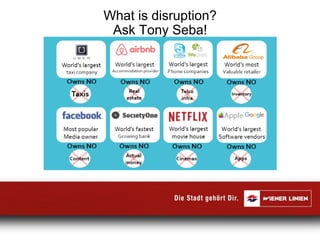
What is disruption?
Ask Tony Seba!
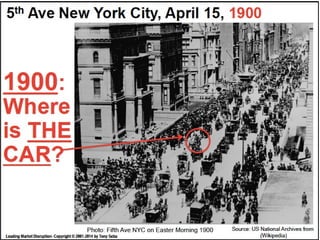
New York, 1900: Where is the Car?
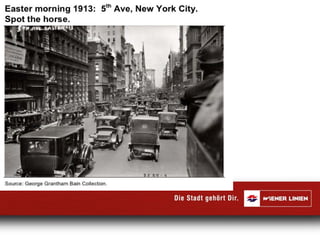
New York, 1913: Where is the Horse?
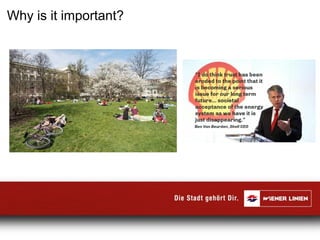
Why is it important?
Digitalisierung der Weltinformation
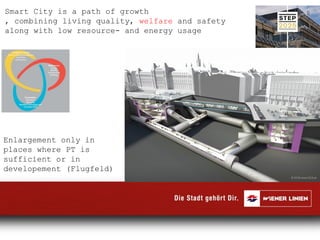
Enlargement only in
places where PT is
sufficient or in
developement (Flugfeld)
Smart City is a path of growth
, combining living quality, welfare and safety
along with low resource- and energy usage
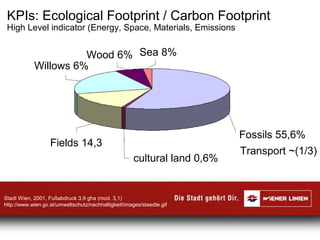
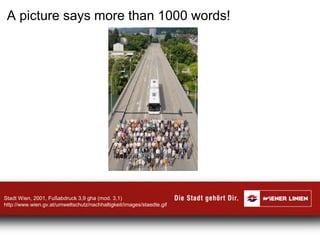
Stadt Wien, 2001, Fußabdruck 3,9 gha (mod. 3,1)
http://www.wien.gv.at/umweltschutz/nachhaltigkeit/images/staedte.gif
KPIs: Ecological Footprint / Carbon Footprint
High Level indicator (Energy, Space, Materials, Emissions
Willows 6%
Wood 6% Sea 8%
Fields 14,3
cultural land 0,6%
Fossils 55,6%
Transport ~(1/3)
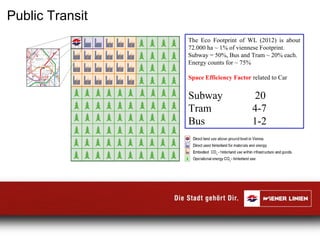
Public Transit
The Eco Footprint of WL (2012) is about
72.000 ha ~ 1% of viennese Footprint.
Subway = 50%, Bus and Tram ~ 20% each.
Energy counts for ~ 75%
Space Efficiency Factor related to Car
Subway 20
Tram 4-7
Bus 1-2
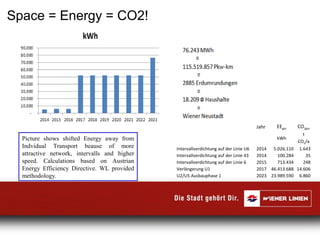
Space = Energy = CO2!
  Jahr EEges CO2ges
 
 
kWh
t 
CO2/a
Intervallverdichtung auf der Linie U6 2014 5.026.110 1.643
Intervallverdichtung auf der Linie 43 2014 100.284 35
Intervallverdichtung auf der Linie 6 2015 713.434 248
Verlängerung U1 2017 46.413.688 14.606
U2/U5 Ausbauphase 1 2023 23.989.590 6.860
Picture shows shifted Energy away from
Indvidual Transport beause of more
attractive network, intervalls and higher
speed. Calculations based on Austrian
Energy Efficiency Directive. WL provided
methodology.
Energieverbrauch [GWh] 14157
KFZ Bestand 2016 700.000
Fahrleistung / Jahr [km] 7 Milliarden
Blick auf 2050
Szenario 1 (busines
as usual)
Szenario 2
(optimistisch)
Einwohnerzahl (Millionen) 2,2 2,2
elektrische Fahrzeuge 0
88.000 (+143.000
autonome Fahrzeuge)
konventionelle Fahrzeuge
220.000 (+ 143.000
autonome Fahrzeuge) 22.000
Fahrleistung/Jahr [km] (konventionell)
2,2 Mrd. (+17 Mrd.
autonome Fahrzeuge) 1,1 Mrd.
Millionen tCO2 1,92 0,176
Tabelle 2: Ausblick auf die Rolle autonomer Fahrzeuge in 2050
E-mobility and autonomous cars in 2050?
Stadt Wien, 2001, Fußabdruck 3,9 gha (mod. 3,1)
http://www.wien.gv.at/umweltschutz/nachhaltigkeit/images/staedte.gif
A picture says more than 1000 words!
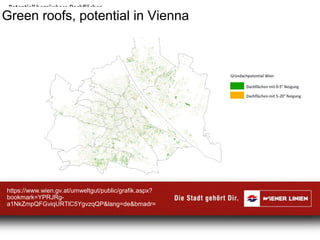
Green roofs, potential in Vienna
https://www.wien.gv.at/umweltgut/public/grafik.aspx?
bookmark=YPRJRg-
a1NkZmpQFGviqURTlC5YgvzqQP&lang=de&bmadr=
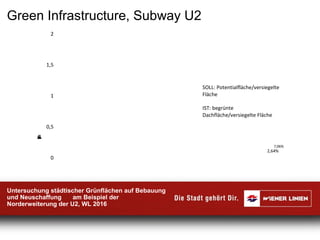
Green Infrastructure, Subway U2
2,64%
7,06%
0
0,5
1
1,5
2
Kompensationspotential
SOLL: Potentialfläche/versiegelte
Fläche
IST: begrünte
Dachfläche/versiegelte Fläche
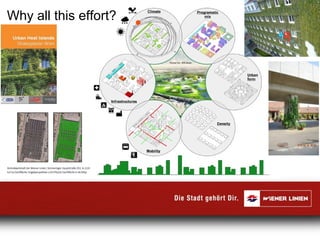
Untersuchung städtischer Grünflächen auf Bebauung
und Neuschaffung am Beispiel der
Norderweiterung der U2, WL 2016
Why all this effort?
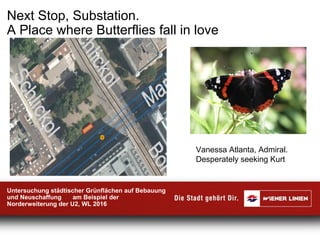
Next Stop, Substation.
A Place where Butterflies fall in love
Untersuchung städtischer Grünflächen auf Bebauung
und Neuschaffung am Beispiel der
Norderweiterung der U2, WL 2016
Vanessa Atlanta, Admiral.
Desperately seeking Kurt
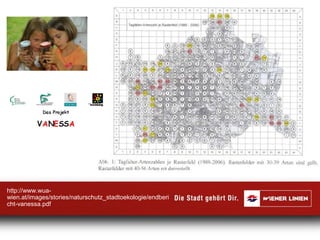
http://www.wua-
wien.at/images/stories/naturschutz_stadtoekologie/endberi
cht-vanessa.pdf
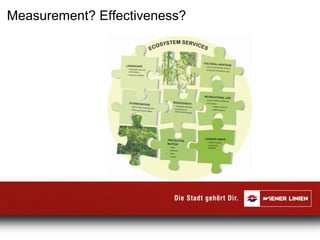
Measurement? Effectiveness?
Space Efficiency and Effective Life through Urban Transport in Vienna

Space Efficiency and Effective Life through Urban Transport in Vienna

  • 1.
    Space Efficiency andEffective Life through Urban Transport Markus Ossberger, Dep. Head of Division Infrastructure 11.05.2017
  • 2.
  • 3.
    New York, 1900:Where is the Car?
  • 4.
    New York, 1913:Where is the Horse?
  • 5.
    Why is itimportant?
  • 6.
  • 7.
    Enlargement only in placeswhere PT is sufficient or in developement (Flugfeld) Smart City is a path of growth , combining living quality, welfare and safety along with low resource- and energy usage
  • 8.
    Stadt Wien, 2001,Fußabdruck 3,9 gha (mod. 3,1) http://www.wien.gv.at/umweltschutz/nachhaltigkeit/images/staedte.gif KPIs: Ecological Footprint / Carbon Footprint High Level indicator (Energy, Space, Materials, Emissions Willows 6% Wood 6% Sea 8% Fields 14,3 cultural land 0,6% Fossils 55,6% Transport ~(1/3)
  • 9.
    Public Transit The EcoFootprint of WL (2012) is about 72.000 ha ~ 1% of viennese Footprint. Subway = 50%, Bus and Tram ~ 20% each. Energy counts for ~ 75% Space Efficiency Factor related to Car Subway 20 Tram 4-7 Bus 1-2
  • 10.
    Space = Energy= CO2!   Jahr EEges CO2ges     kWh t  CO2/a Intervallverdichtung auf der Linie U6 2014 5.026.110 1.643 Intervallverdichtung auf der Linie 43 2014 100.284 35 Intervallverdichtung auf der Linie 6 2015 713.434 248 Verlängerung U1 2017 46.413.688 14.606 U2/U5 Ausbauphase 1 2023 23.989.590 6.860 Picture shows shifted Energy away from Indvidual Transport beause of more attractive network, intervalls and higher speed. Calculations based on Austrian Energy Efficiency Directive. WL provided methodology.
  • 11.
    Energieverbrauch [GWh] 14157 KFZBestand 2016 700.000 Fahrleistung / Jahr [km] 7 Milliarden Blick auf 2050 Szenario 1 (busines as usual) Szenario 2 (optimistisch) Einwohnerzahl (Millionen) 2,2 2,2 elektrische Fahrzeuge 0 88.000 (+143.000 autonome Fahrzeuge) konventionelle Fahrzeuge 220.000 (+ 143.000 autonome Fahrzeuge) 22.000 Fahrleistung/Jahr [km] (konventionell) 2,2 Mrd. (+17 Mrd. autonome Fahrzeuge) 1,1 Mrd. Millionen tCO2 1,92 0,176 Tabelle 2: Ausblick auf die Rolle autonomer Fahrzeuge in 2050 E-mobility and autonomous cars in 2050?
  • 12.
    Stadt Wien, 2001,Fußabdruck 3,9 gha (mod. 3,1) http://www.wien.gv.at/umweltschutz/nachhaltigkeit/images/staedte.gif A picture says more than 1000 words!
  • 13.
    Green roofs, potentialin Vienna https://www.wien.gv.at/umweltgut/public/grafik.aspx? bookmark=YPRJRg- a1NkZmpQFGviqURTlC5YgvzqQP&lang=de&bmadr=
  • 14.
    Green Infrastructure, SubwayU2 2,64% 7,06% 0 0,5 1 1,5 2 Kompensationspotential SOLL: Potentialfläche/versiegelte Fläche IST: begrünte Dachfläche/versiegelte Fläche Untersuchung städtischer Grünflächen auf Bebauung und Neuschaffung am Beispiel der Norderweiterung der U2, WL 2016
  • 15.
    Why all thiseffort?
  • 16.
    Next Stop, Substation. APlace where Butterflies fall in love Untersuchung städtischer Grünflächen auf Bebauung und Neuschaffung am Beispiel der Norderweiterung der U2, WL 2016 Vanessa Atlanta, Admiral. Desperately seeking Kurt
  • 17.
  • 18.

Hinweis der Redaktion

  • #3 Spatial usage is tightly connected to trhe way we integrate mobility within an urban area Vehicle technology and ist change to electric and autonomous maybe shared only cars is changing.