 Introduction
 Definition
 Incubation Period
 Investigation
 Pathophysiology
 Sign &Symptoms
 Treatment
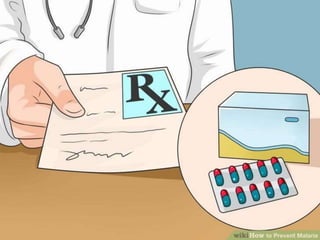
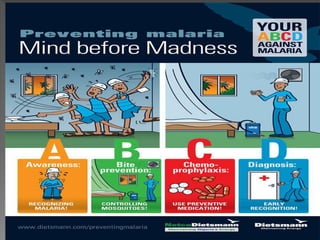
 Prevention & Precautions
 Malaria is a Mosquito-Borne febrile Disease caused by
Malaria Parasites
 Malaria ( Mala means Bad and Aria means Air ) is a
Protozoal Infection
 A disease caused by members of the protozoan
genus Plasmodium, a wide spread group of sporozoans
that Parasites affect the human liver and red blood cells.
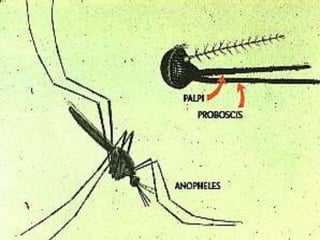
 Humans are infected with Plasmodium protozoa when
bitten by an infective female Anopheles mosquito
vector.
 Symptoms may appear within weeks to months or even
years.
 There are 4 species of Malaria Parasites :
› plasmodium Falciparum
› plasmodium Vivax
› plasmodium ovale
› plasmodium Malariae
 Malaria Found in about 100 Countries in the World
 Maximum Prevalence of Malaria is found in Warm & Humid
Environment and Mostly seen in July to November in India
 Optimal Temp & Humidity for the Development of Parasite is 20 to
30 F and about 60% Humidity.
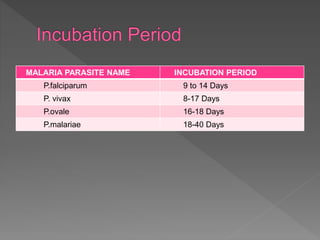
MALARIA PARASITE NAME INCUBATION PERIOD
P.falciparum 9 to 14 Days
P. vivax 8-17 Days
P.ovale 16-18 Days
P.malariae 18-40 Days
 All clinically suspected malaria cases require
laboratory examination and confirmation.
 History Collection
 Physical Examination
 M.P.(Malaria Parasite) Test
 The Peripheral Smear
 Bone Marrow Smear
 CBC,TC,DC
Consider other illnesses, such as:
 Upper respiratory tract infection
(Pharyngitis, tonsillitis, ear infection),
pneumonia , measles, dengue, influenza,
typhoid fever.
Remember that the patient may be suffering
from more than one illness.
Consider other illness, such as:
 measles, meningitis, tonsilitis,, dengue, otitis media
(ear infection), influenza, pneumonia, typhoid fever,
tuberculosis, hypoglycemia.
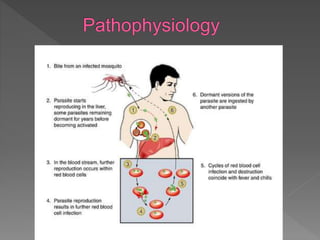
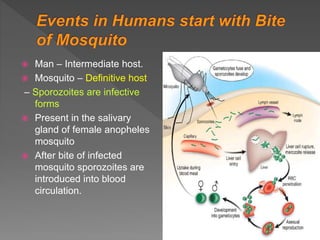
 Man – Intermediate host.
 Mosquito – Definitive host
– Sporozoites are infective
forms
 Present in the salivary
gland of female anopheles
mosquito
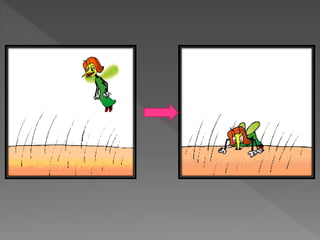
 After bite of infected
mosquito sporozoites are
introduced into blood
circulation.
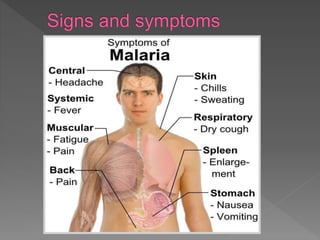
 High fever with Headache
 Restlessness , Anorexia ,Diarrhoea
 arthralgia (joint pain)
 vomiting, anemia (caused by hemolysis)
 Chills with Rigors
 Hepatospleenomegaly
 Convulsions
 Coma ( If Severe )
 Typically Paroxysmal Attack of Malarial Fever found
in Three Stages .
 Cold Stage
 Hot Stage
 Sweating Stage
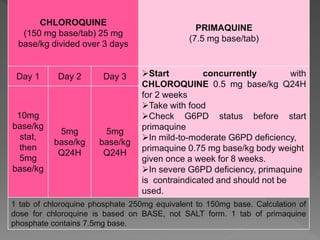
CHLOROQUINE
(150 mg base/tab) 25 mg
base/kg divided over 3 days
PRIMAQUINE
(7.5 mg base/tab)
Day 1 Day 2 Day 3 Start concurrently with
CHLOROQUINE 0.5 mg base/kg Q24H
for 2 weeks
Take with food
Check G6PD status before start
primaquine
In mild-to-moderate G6PD deficiency,
primaquine 0.75 mg base/kg body weight
given once a week for 8 weeks.
In severe G6PD deficiency, primaquine
is contraindicated and should not be
used.
10mg
base/kg
stat,
then
5mg
base/kg
5mg
base/kg
Q24H
5mg
base/kg
Q24H
1 tab of chloroquine phosphate 250mg equivalent to 150mg base. Calculation of
dose for chloroquine is based on BASE, not SALT form. 1 tab of primaquine
phosphate contains 7.5mg base.
 Management of Malaria includes Following
Measures..
1. Early Detection & Early Treatment
2. Mosquito Control Measures
3. Community
 Early Detection of Fever Cases in the Community by
House to House Visit by the Health Workers in Every
15 Days
 Early Administration of Chloroquine(CHQ) to All Fevers
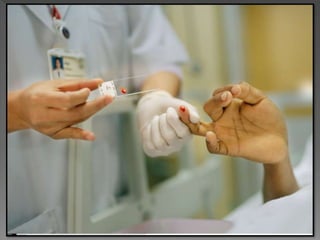
 Collection of Blood Films(Thick & Thin) from Fever
Cases & Laboratory Examinations for Malaria Parasite
 Administration of Medical Treatment to All Positive
Cases of Malaria
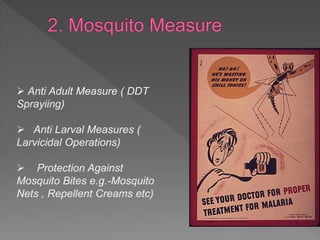
 Anti Adult Measure ( DDT
Sprayiing)
 Anti Larval Measures (
Larvicidal Operations)
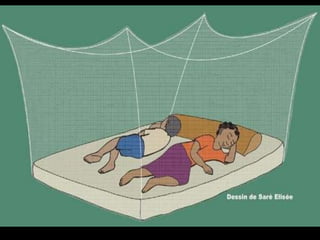
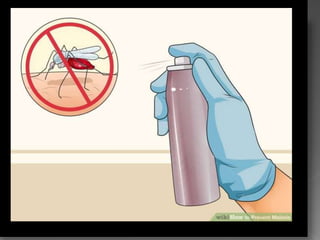
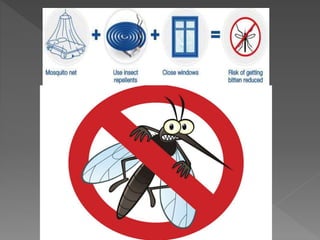
 Protection Against
Mosquito Bites e.g.-Mosquito
Nets , Repellent Creams etc)
 removing or poisoning the breeding grounds of the
mosquitoes or the aquatic habitats of the larva
stages, for example by filling or applying oil to places
with standing water
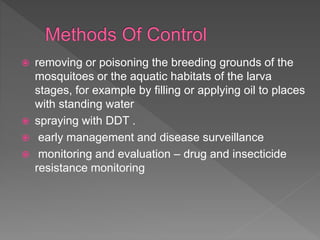
 spraying with DDT .
 early management and disease surveillance
 monitoring and evaluation – drug and insecticide
resistance monitoring
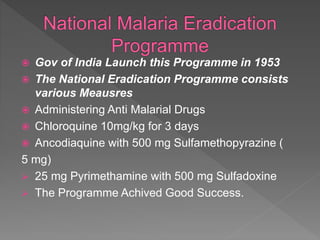
 Gov of India Launch this Programme in 1953
 The National Eradication Programme consists
various Meausres
 Administering Anti Malarial Drugs
 Chloroquine 10mg/kg for 3 days
 Ancodiaquine with 500 mg Sulfamethopyrazine (
5 mg)
 25 mg Pyrimethamine with 500 mg Sulfadoxine
 The Programme Achived Good Success.
Malaria

Malaria

  • 2.
     Introduction  Definition Incubation Period  Investigation  Pathophysiology  Sign &Symptoms  Treatment  Prevention & Precautions
  • 3.
     Malaria isa Mosquito-Borne febrile Disease caused by Malaria Parasites  Malaria ( Mala means Bad and Aria means Air ) is a Protozoal Infection  A disease caused by members of the protozoan genus Plasmodium, a wide spread group of sporozoans that Parasites affect the human liver and red blood cells.  Humans are infected with Plasmodium protozoa when bitten by an infective female Anopheles mosquito vector.  Symptoms may appear within weeks to months or even years.
  • 4.
     There are4 species of Malaria Parasites : › plasmodium Falciparum › plasmodium Vivax › plasmodium ovale › plasmodium Malariae  Malaria Found in about 100 Countries in the World  Maximum Prevalence of Malaria is found in Warm & Humid Environment and Mostly seen in July to November in India  Optimal Temp & Humidity for the Development of Parasite is 20 to 30 F and about 60% Humidity.
  • 5.
    MALARIA PARASITE NAMEINCUBATION PERIOD P.falciparum 9 to 14 Days P. vivax 8-17 Days P.ovale 16-18 Days P.malariae 18-40 Days
  • 8.
     All clinicallysuspected malaria cases require laboratory examination and confirmation.  History Collection  Physical Examination  M.P.(Malaria Parasite) Test  The Peripheral Smear  Bone Marrow Smear  CBC,TC,DC
  • 9.
    Consider other illnesses,such as:  Upper respiratory tract infection (Pharyngitis, tonsillitis, ear infection), pneumonia , measles, dengue, influenza, typhoid fever. Remember that the patient may be suffering from more than one illness.
  • 10.
    Consider other illness,such as:  measles, meningitis, tonsilitis,, dengue, otitis media (ear infection), influenza, pneumonia, typhoid fever, tuberculosis, hypoglycemia.
  • 12.
     Man –Intermediate host.  Mosquito – Definitive host – Sporozoites are infective forms  Present in the salivary gland of female anopheles mosquito  After bite of infected mosquito sporozoites are introduced into blood circulation.
  • 15.
     High feverwith Headache  Restlessness , Anorexia ,Diarrhoea  arthralgia (joint pain)  vomiting, anemia (caused by hemolysis)  Chills with Rigors  Hepatospleenomegaly  Convulsions  Coma ( If Severe )
  • 16.
     Typically ParoxysmalAttack of Malarial Fever found in Three Stages .  Cold Stage  Hot Stage  Sweating Stage
  • 18.
    CHLOROQUINE (150 mg base/tab)25 mg base/kg divided over 3 days PRIMAQUINE (7.5 mg base/tab) Day 1 Day 2 Day 3 Start concurrently with CHLOROQUINE 0.5 mg base/kg Q24H for 2 weeks Take with food Check G6PD status before start primaquine In mild-to-moderate G6PD deficiency, primaquine 0.75 mg base/kg body weight given once a week for 8 weeks. In severe G6PD deficiency, primaquine is contraindicated and should not be used. 10mg base/kg stat, then 5mg base/kg 5mg base/kg Q24H 5mg base/kg Q24H 1 tab of chloroquine phosphate 250mg equivalent to 150mg base. Calculation of dose for chloroquine is based on BASE, not SALT form. 1 tab of primaquine phosphate contains 7.5mg base.
  • 19.
     Management ofMalaria includes Following Measures.. 1. Early Detection & Early Treatment 2. Mosquito Control Measures 3. Community
  • 20.
     Early Detectionof Fever Cases in the Community by House to House Visit by the Health Workers in Every 15 Days  Early Administration of Chloroquine(CHQ) to All Fevers  Collection of Blood Films(Thick & Thin) from Fever Cases & Laboratory Examinations for Malaria Parasite  Administration of Medical Treatment to All Positive Cases of Malaria
  • 22.
     Anti AdultMeasure ( DDT Sprayiing)  Anti Larval Measures ( Larvicidal Operations)  Protection Against Mosquito Bites e.g.-Mosquito Nets , Repellent Creams etc)
  • 24.
     removing orpoisoning the breeding grounds of the mosquitoes or the aquatic habitats of the larva stages, for example by filling or applying oil to places with standing water  spraying with DDT .  early management and disease surveillance  monitoring and evaluation – drug and insecticide resistance monitoring
  • 28.
     Gov ofIndia Launch this Programme in 1953  The National Eradication Programme consists various Meausres  Administering Anti Malarial Drugs  Chloroquine 10mg/kg for 3 days  Ancodiaquine with 500 mg Sulfamethopyrazine ( 5 mg)  25 mg Pyrimethamine with 500 mg Sulfadoxine  The Programme Achived Good Success.