Von Joost & PatrickSeite 1
DIE
MACHT
DER MARKE
Von Joost & PatrickSeite 2
PROGRAMM
Einleitung – Wozu dient eine Marke?
Schlüsselfaktoren – Was einen
Markennamen erfolgreich macht
Ende
Wie kontrolliert man seinen Markenerfolg?
Von Joost & PatrickSeite 3
Einführung - MARKEN
Einleitung
Schlüssel-
faktoren
Controlling Ende
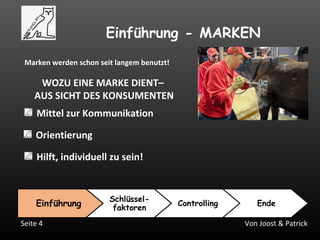
Marken werden schon seit langem benutzt!
WOZU EINE MARKE DIENT–
AUS SICHT DES KONSUMENTEN
Orientierung
Identifizierung
Vertrauen & Sicherheit Image, Prestige, Status
Von Joost & PatrickSeite 4
Einführung - MARKEN
Marken werden schon seit langem benutzt!
WOZU EINE MARKE DIENT–
AUS SICHT DES KONSUMENTEN
Orientierung
Mittel zur Kommunikation
Hilft, individuell zu sein!
Einführung
Schlüssel-
faktoren
Controlling Ende
Von Joost & PatrickSeite 5
Einführung - MARKEN
Blindversuch vs. Markentest - Pepsi vs. Coca-Cola
Einführung
Schlüssel-
faktoren
Controlling Ende
Von Joost & PatrickSeite 6
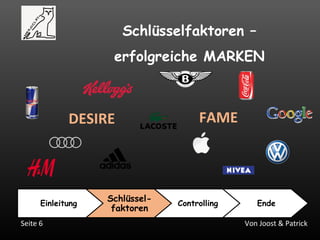
Schlüsselfaktoren –
erfolgreiche MARKEN
Einleitung
Schlüssel-
faktoren
Controlling Ende
DESIRE FAME
Von Joost & PatrickSeite 7
Schlüsselfaktoren –
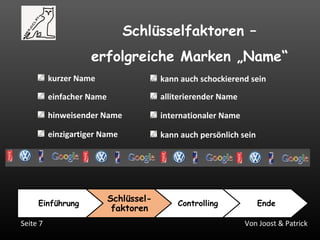
erfolgreiche Marken „Name“
Einführung
Schlüssel-
faktoren
Controlling Ende
kurzer Name
einfacher Name
hinweisender Name
einzigartiger Name
alliterierender Name
internationaler Name
kann auch schockierend sein
kann auch persönlich sein
Von Joost & PatrickSeite 8
Hieroglifs International
Einführung
Schlüssel-
faktoren
Controlling Ende
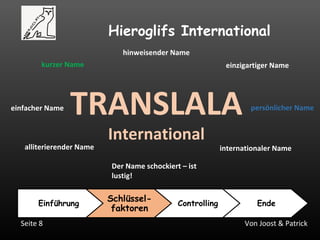
TRANSLALA
International
kurzer Name
einfacher Name
einzigartiger Name
alliterierender Name internationaler Name
Der Name schockiert – ist
lustig!
persönlicher Name
hinweisender Name
Von Joost & PatrickSeite 10
Markenerfolg –
Wie kontrolliert man ihn?
Einführung
Schlüssel-
faktoren
Controlling Ende
Primäre Marktforschung!
Recognition-Test Image-Test
Von Joost & PatrickSeite 11
Ende - MARKEN
Einleitung
Schlüssel-
faktoren
Controlling Ende
VIELEN DANK FÜR IHRE
AUFMERKSAMKEIT!
Übersetzt von: Chantal Faulhaber
Bis dann!!

Die Macht der Marke

  • 1.
    Von Joost &PatrickSeite 1 DIE MACHT DER MARKE
  • 2.
    Von Joost &PatrickSeite 2 PROGRAMM Einleitung – Wozu dient eine Marke? Schlüsselfaktoren – Was einen Markennamen erfolgreich macht Ende Wie kontrolliert man seinen Markenerfolg?
  • 3.
    Von Joost &PatrickSeite 3 Einführung - MARKEN Einleitung Schlüssel- faktoren Controlling Ende Marken werden schon seit langem benutzt! WOZU EINE MARKE DIENT– AUS SICHT DES KONSUMENTEN Orientierung Identifizierung Vertrauen & Sicherheit Image, Prestige, Status
  • 4.
    Von Joost &PatrickSeite 4 Einführung - MARKEN Marken werden schon seit langem benutzt! WOZU EINE MARKE DIENT– AUS SICHT DES KONSUMENTEN Orientierung Mittel zur Kommunikation Hilft, individuell zu sein! Einführung Schlüssel- faktoren Controlling Ende
  • 5.
    Von Joost &PatrickSeite 5 Einführung - MARKEN Blindversuch vs. Markentest - Pepsi vs. Coca-Cola Einführung Schlüssel- faktoren Controlling Ende
  • 6.
    Von Joost &PatrickSeite 6 Schlüsselfaktoren – erfolgreiche MARKEN Einleitung Schlüssel- faktoren Controlling Ende DESIRE FAME
  • 7.
    Von Joost &PatrickSeite 7 Schlüsselfaktoren – erfolgreiche Marken „Name“ Einführung Schlüssel- faktoren Controlling Ende kurzer Name einfacher Name hinweisender Name einzigartiger Name alliterierender Name internationaler Name kann auch schockierend sein kann auch persönlich sein
  • 8.
    Von Joost &PatrickSeite 8 Hieroglifs International Einführung Schlüssel- faktoren Controlling Ende TRANSLALA International kurzer Name einfacher Name einzigartiger Name alliterierender Name internationaler Name Der Name schockiert – ist lustig! persönlicher Name hinweisender Name
  • 9.
    Von Joost &PatrickSeite 10 Markenerfolg – Wie kontrolliert man ihn? Einführung Schlüssel- faktoren Controlling Ende Primäre Marktforschung! Recognition-Test Image-Test
  • 10.
    Von Joost &PatrickSeite 11 Ende - MARKEN Einleitung Schlüssel- faktoren Controlling Ende VIELEN DANK FÜR IHRE AUFMERKSAMKEIT! Übersetzt von: Chantal Faulhaber Bis dann!!

Hinweis der Redaktion

  • #4 History: People used to trade mostly with people they trust. As corporations grew bigger, the brand took over the role of the trusted salesperson and friend. People attribute personalitv characteristics to a brand. It is an imaginary person. Orientation: Quality, Price etc. Identification: Supports your personnel requirements Confidence/Security: A brand which is well-known gives more security than a brand which no one knows. Image, Prestige, Status: Of course a brand also has the function of presentation. That means people use brands to show off and to demonstrate their social status.
  • #5 Communication tool: Usually the company wants to communicate its corporate identity with the brand. It´s a short but very important way to show who you are! Often people identify your product or service completely different than your corporate identity intends to be. Orientation: A brand should or has to reflect your desired market position. Supports to be different: In a high competetive market its maybe the most important point why companies establish brands! The next example will show the importance of having a good brand!
  • #6 Supports to be different (example of Pepsi & Coca Cola): On account of this example it can be seen that at the first test, the blind test on which people couldn´t see the brand and had to decide only because of the flavour, 51% of all participants chose the Pepsi Cola. Then at the second test, when they could see the brand only 23% chose the brand Pepsi.
  • #7 Why do You think these brands are so successful? Maybe we will find a answer on the next slide. DESIRE and FAME!
  • #8 Use a short name: H&M, VW, Audi, Red Bull, etc. Use a simple name: H&M, VW, Audi, Google, etc. Use a suggestiv name: Red Bull Use a unique name: Google The name can also shock: no example Use a alliterative name: Google, Coca Cola Use a international name: Google, Coca Cola (In this case I have an example how you should not enter in a market. Do you know the car brand „Pajero“? When the company entered the spanish market with this name they get confronted with negative feedback because the word „Pajero“ in Spain means a masturbating man. The name can be personel: You&me
  • #9 Based on these points I considered a brand regarding a company which mainly deals with translations and languages. The name which came into my mind is as follows: TRANSLALA International Now let´s analyse together these name on account of the key aspects we discussed. Short name: It´s not really a short name but it´s also not that long – I would say it´s ok! Simple name: I would say yes. Alliterative: I also would say yes. Especially because of the use of the LALA at the end. The name shocks: The name definetely doesn´t shock but it attracts attention and sounds funny. In reference to the 8 criterias, we never told about funny names but in my view I think it works. International name: Of course! Personel name: The name is not personel. Unique name: According to Google it is. Suggestiv name: I would say yes because the name gives the hint for Translation. Usually the last LA should emphasize the connectivity to languages. The meaning of the brand: Translations & Languages International The different colors should emphasize that at least 6 aspects which outlines a good name are met. The green one means more or less.
  • #10 Recognition or Recall test: Here you can test who knows your brand! Image test: The image test enables you to know if the images fits together with the message you are trying to communicate.